
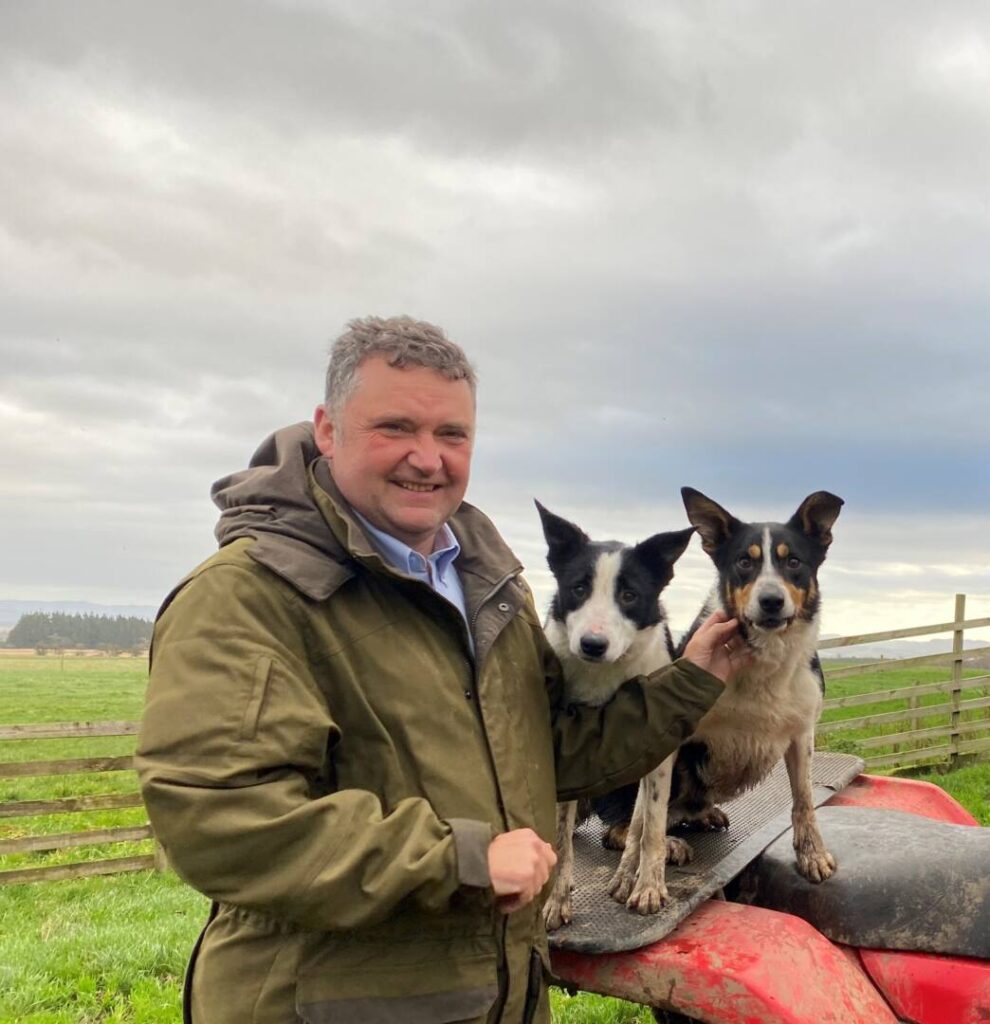
Agricultural charity RSABI is marking Mental Health Awareness Week by announcing a major milestone in its work to support Scotland’s farming and crofting communities, with over 1,000 Mental Health First Aiders now trained across the country.
The landmark achievement marks a significant step forward in strengthening mental health awareness and suicide prevention to support in Scottish agriculture. Trained first aiders are now embedded in rural communities from Shetland and Orkney to Aberdeenshire, the west coast, the Borders and south-west Scotland.
The newly trained mental health first aiders marks the continued expansion of RSABI’s Mental Health First Aid programme, which is being delivered in partnership with former Royal Marines at IED Training Solutions and supported thanks to funding from the NFU Mutual Charitable Trust.
The certified training course is aimed at people working on the frontline with farmers and crofters across Scotland, encouraging more open conversations around mental health, helping to reduce stigma, improve understanding and equip people with the confidence to recognise when someone may be struggling and know how best to respond.
Those trained through the programme include agricultural consultants and advisers, quality assurance assessors, auctioneers and agronomists – all individuals regularly working alongside farmers and crofters in their day-to-day roles. Agricultural businesses and organisations are offered the training free of charge through RSABI, the charity which provides financial, practical and emotional support to people in Scottish agriculture.
Carol McLaren, Chief Executive of RSABI, said: “While mental health remains an area of significant concern in agricultural communities, initiatives like this Mental Health First Aid training programme are helping to drive forward a time of positive change.
“We know that having the knowledge and confidence to be more open in talking about mental health and suicide will help to save lives and we have now developed a network of mental health first aiders who are playing a vital role to help keep people safe.
“Our sincere thanks to former Royal Marines Ian Clark, Hugh Jones and Ross Wilson of IED Training Solutions who have worked incredibly hard and well to deliver this transformational and pioneering training to agricultural communities throughout Scotland.”
The former Royal Marines also share their own personal mental health journeys as part of the course and feedback from attendees has been extremely encouraging, with more than 80% rating the training as “outstanding” and many describing the training as “invaluable and vital”.
The Mental Health First Aid programme forms part of RSABI’s wider commitment to improving mental wellbeing and preventing suicide within Scottish agriculture. Alongside continuing to roll out the training nationwide with support from the NFU Mutual Charitable Trust, the charity last year introduced a dedicated full-time Suicide Prevention Lead role and is also undertaking a major research project with University of Glasgow aimed at better understanding and preventing suicide within Scotland’s farming and crofting communities.
To arrange Mental Health First Aid training or more information about Applied Suicide Intervention Skills Training please email mentalhealthtraining@rsabi.org.uk.
RSABI offers free practical, financial, and emotional support including counselling services, delivered quickly after receiving the initial enquiry. Its free confidential support service is available 24 hours a day, every day of the year, by calling 0808 1234 555 (calls won’t show up on phone bills) or through a confidential webchat service, available on RSABI’s website www.rsabi.org.uk.
If you are having thoughts of suicide, please reach out for help, speak to someone you trust or call one of these helplines:
- Samaritans: 116 123 (Available 24/7)
- Breathing Space: 0800 83 85 87 (Available Monday to Thursday 6pm to 2am. At weekends, open between Friday 6pm and Monday 6am)
- NHS 24 mental health hub on: 111 (Available 24/7)
- If you don’t feel you can keep yourself safe right now, please seek immediate help by attending any Accident and Emergency (A&E) or contact 999 and request an ambulance.